
The Gut-Hormone Connection: Why Your Microbiome Matters More in Your 40s

There is a conversation happening inside your body that nobody told you about. It takes place between two systems you probably think of as entirely separate: your gut and your hormones. And in your 40s, when both are shifting simultaneously, understanding this conversation is one of the most useful things you can do for your health.
The research on the gut-hormone axis has moved quickly in the last decade. What was once considered fringe science — the idea that the trillions of microorganisms living in your digestive tract could meaningfully influence your hormonal balance — is now well-evidenced, well-characterised, and increasingly central to how we understand perimenopausal health. This post explains what the science actually says, why the 40s are a critical window, and what you can do about it starting today.
What is the gut microbiome, and why does it matter for hormones?
Your gut microbiome is the community of bacteria, fungi, viruses, and other microorganisms that live in your digestive tract — predominantly in the large intestine. There are approximately 38 trillion microbial cells in the average human body, roughly equivalent in number to your own cells. They are not passive passengers. They produce vitamins, train your immune system, manufacture neurotransmitters, regulate inflammation, and — critically for this conversation — metabolise hormones.
A specific subset of gut bacteria, collectively called the estrobolome, is responsible for metabolising oestrogen. These bacteria produce an enzyme called beta-glucuronidase, which deconjugates oestrogen metabolites in the gut, allowing them to be reabsorbed into circulation rather than excreted. When the estrobolome is diverse and balanced, oestrogen metabolism is regulated. When it is disrupted — through poor diet, antibiotics, chronic stress, or age — oestrogen levels can swing in either direction, contributing to the very symptoms many women experience in perimenopause: irregular cycles, weight shifts, mood changes, brain fog, and sleep disruption.
Why your 40s are a particularly important window
Gut microbiome diversity naturally declines with age. Multiple large-scale studies — including a 2019 analysis in Cell Host & Microbe — have shown that microbial diversity decreases progressively from midlife onwards, with particular losses in the beneficial Lactobacillus and Bifidobacterium species that support gut barrier integrity and oestrogen metabolism. This decline happens to coincide almost exactly with perimenopause.
Oestrogen itself supports microbial diversity. As oestrogen levels fluctuate and ultimately decline through perimenopause, the microbiome loses one of its key stabilisers — creating a bidirectional feedback loop. Lower oestrogen leads to reduced microbial diversity; reduced microbial diversity impairs oestrogen metabolism; impaired oestrogen metabolism leads to more erratic hormonal fluctuations. Understanding this cycle is important, because it means that supporting your gut is not separate from supporting your hormones. It is the same intervention.
There is also a cortisol dimension. Chronic psychological stress — and the elevated cortisol it produces — directly disrupts the gut microbiome through several mechanisms, including altering gut motility, increasing intestinal permeability (what is colloquially called “leaky gut”), and changing the composition of microbial communities. Women in their 40s frequently carry high allostatic load: career pressures, family demands, the cognitive and emotional labour of midlife. This chronic stress quietly erodes the gut environment at exactly the moment when it most needs support.
The gut-brain axis and why your mood follows your meals
Approximately 95% of your body’s serotonin is produced in the gut — not the brain. This is not a metaphor. Enterochromaffin cells lining the gut wall synthesise serotonin in response to signals from gut bacteria, and this serotonin plays a role in regulating mood, appetite, sleep, and cognitive function. The vagus nerve — a long, wandering nerve connecting the gut and brain — carries signals in both directions, meaning that what is happening in your digestive tract is in constant, real-time communication with your emotional state and cognitive clarity.
When gut dysbiosis is present — an imbalance in microbial communities — serotonin production is impaired, inflammatory cytokines rise, and the gut-brain communication pathway becomes noisy and dysregulated. This manifests as anxiety, low mood, irritability, and the particular kind of cognitive fog that many perimenopausal women describe: thoughts that won’t come clearly, words that don’t arrive, a sense of being mentally underwater. This is not a psychological problem with a psychological solution. It is a biological problem with a nutritional one.
How the gut microbiome connects to biological ageing
Here is where the gut-hormone story connects to the broader science of biological age reversal. The peer-reviewed research underpinning The Cellular Reset — including the 2021 randomised controlled trial published in Aging (Cell Press) — identifies polyphenol metabolism as a key driver of epigenetic age reversal. Forty-four per cent of the outcome variability in the secondary analysis was explained by dietary polyphenols: the compounds found in green tea, turmeric, berries, garlic, and rosemary.
But here is the crucial detail: polyphenols are not biologically active in the form you eat them. They must first be metabolised by gut bacteria into their active metabolites — urolithins, equol, enterolactone, and others — before they can perform their epigenetic work. Your microbiome is quite literally the gateway through which your diet becomes your biology. A compromised gut means a compromised response to even the most carefully chosen foods. This is why gut health is not a separate pillar of the protocol. It is the foundation on which the entire nutritional strategy stands.
What actually supports the gut-hormone axis

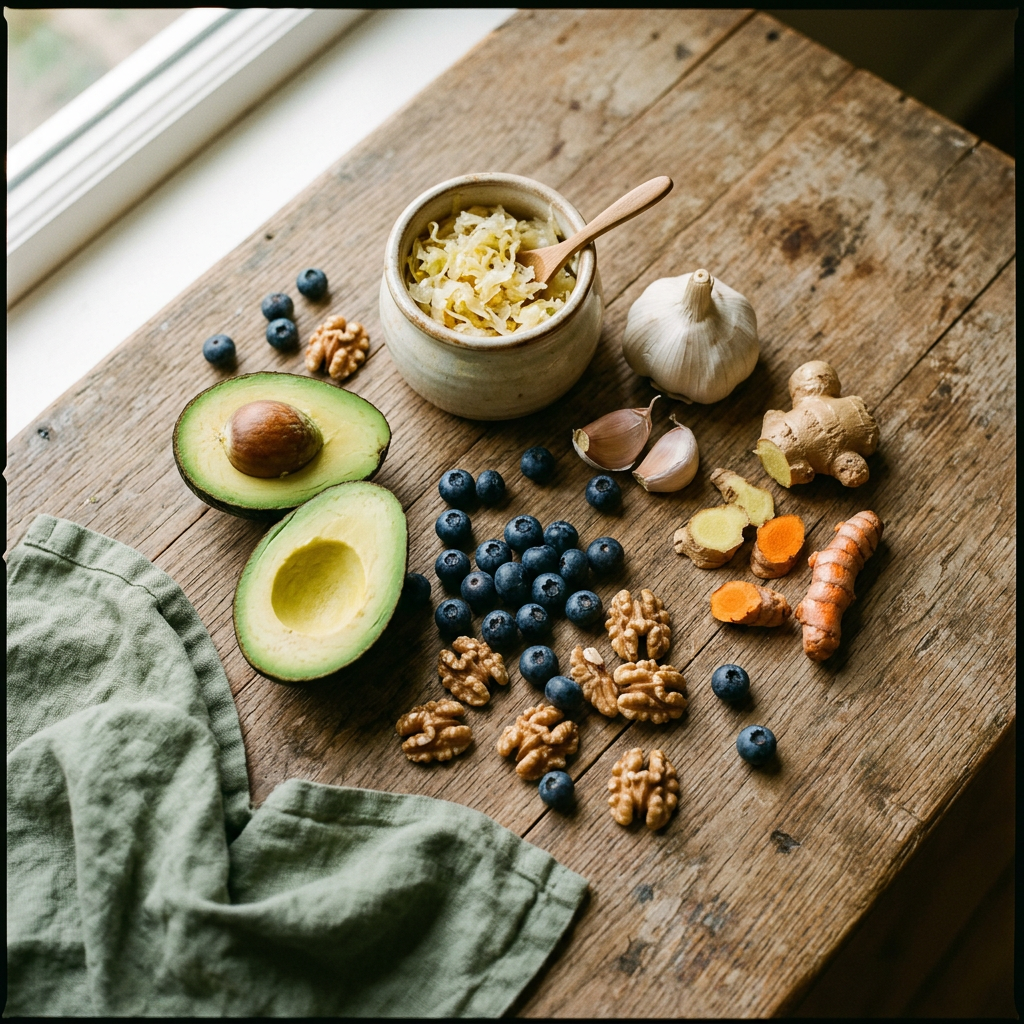
The evidence points clearly to several practical interventions. Fermented foods — kefir, sauerkraut, kimchi, natural yoghurt, tempeh — introduce live microbial cultures that measurably increase gut diversity. A 2021 randomised trial in Cell (Sonnenburg et al.) found that a high-fermented-food diet increased microbiome diversity and reduced 19 inflammatory proteins over 10 weeks — significantly outperforming a high-fibre diet alone in driving diversity gains. For women in perimenopause, the data on fermented soy (miso, tempeh, natto) is particularly relevant: these foods contain isoflavones that act as phytoestrogens and are metabolised by specific gut bacteria into equol, a compound with meaningful oestrogenic activity that may help moderate perimenopausal symptoms.
Dietary fibre — particularly prebiotic fibre from vegetables, legumes, seeds, and resistant starch — feeds the beneficial bacteria that produce short-chain fatty acids (SCFAs) including butyrate. Butyrate is the primary fuel of colonocytes (gut lining cells) and is essential for maintaining gut barrier integrity. A damaged gut barrier allows bacterial endotoxins to enter circulation, triggering low-grade systemic inflammation — one of the most consistent drivers of accelerated biological ageing.
Polyphenol-rich foods — berries, green tea, dark chocolate, olive oil, red onion — selectively feed the beneficial bacteria responsible for producing the active metabolites that drive epigenetic age reversal. The 12-hour overnight fast, a core habit in The Cellular Reset, additionally supports the gut by allowing microbial communities to complete their own cyclical repair processes undisturbed. Stress management practice — the Relaxation Response, the twice-daily breathing protocol used in the original RCT — directly reduces cortisol-driven gut disruption.
Practical steps to start today
You do not need to overhaul everything at once. The microbiome responds relatively quickly to dietary change — measurable shifts in composition can occur within 24–48 hours of dietary modification, according to research from the Knight Lab at UC San Diego. Consistency matters more than perfection.
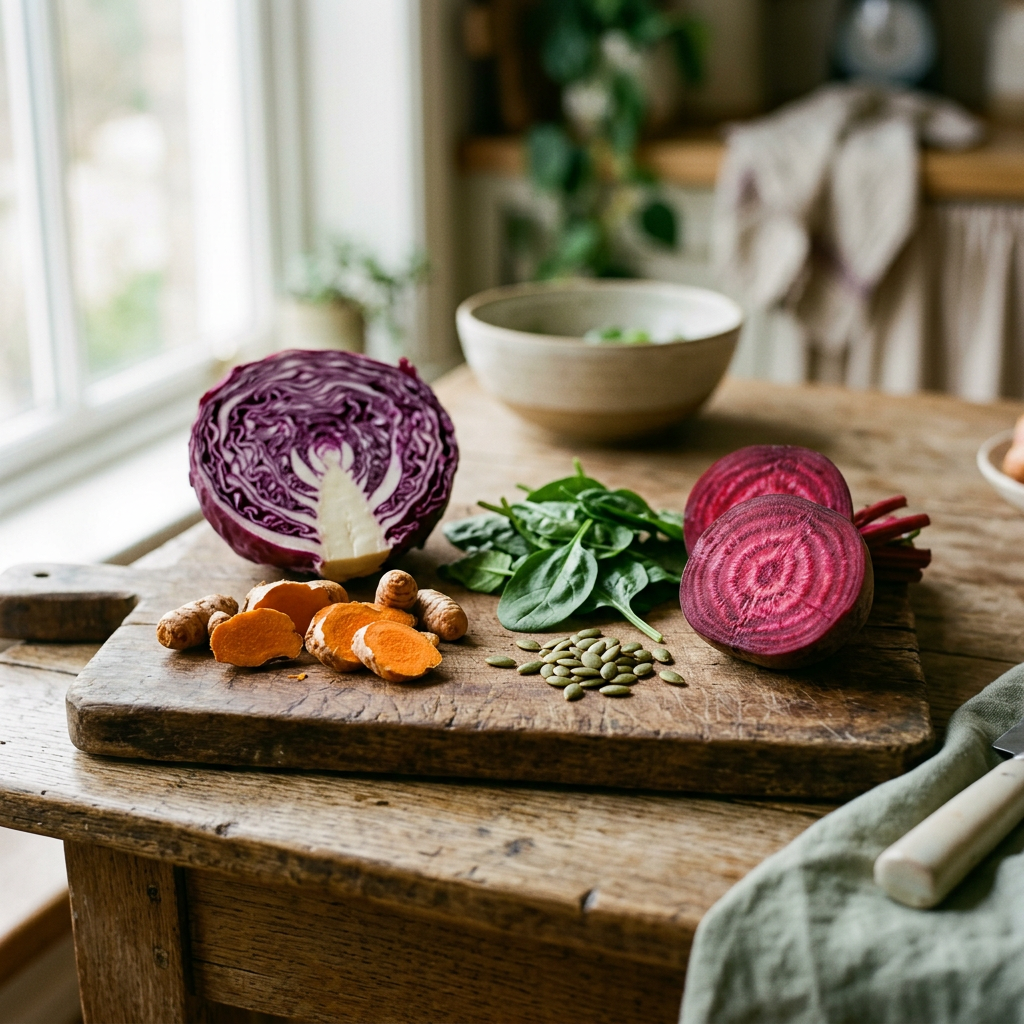
Add one fermented food daily — a tablespoon of sauerkraut, a small glass of kefir, a serving of natural live yoghurt. Prioritise diversity in your vegetables: aim for 30 different plant foods per week, which research in the American Gut Project strongly associated with greater microbiome diversity. Reduce ultra-processed foods, which feed the inflammatory bacterial species that outcompete the beneficial ones. Support your gut barrier with bone broth, collagen-rich foods, and adequate zinc from pumpkin seeds and meat.
The gut-hormone connection is not a wellness trend. It is a well-characterised biological system that, when supported intentionally, meaningfully improves hormonal balance, mood, cognitive clarity, and — through the polyphenol pathway — your biological age. In your 40s, with both oestrogen and microbial diversity in natural decline, it is one of the highest-leverage areas you can work on.
If you want a structured, evidence-based approach to supporting every pillar of this — including gut health, methylation nutrition, sleep, and stress regulation — The Cellular Reset is designed exactly for this stage of life. Find out more about the programme here.
Free Assessment
What is your biological age?
Most women in perimenopause are ageing faster than their chronological age suggests. The free Bio Age Assessment takes three minutes and gives you a personalised starting point — based on your lifestyle, not a blood test.


