
Ovulation and Appetite After 40: How to Eat When Your Cycle Changes
Three things to take from this article
- Track your energy, appetite, and sleep for two cycles before changing how you eat around ovulation.
- Build each meal around protein, fibre-rich carbohydrates, colourful plants, and a source of unsaturated fat.
- Use a flexible ovulation-phase template, not rigid cycle rules, when perimenopause makes timing less predictable.
There is often a particular kind of confidence around ovulation. You may notice more energy in a morning meeting, a stronger desire to move, or an appetite that feels briefly easier to read. Then, a few days later, the pattern shifts. A familiar meal no longer carries you through the afternoon, or you reach dinner with a hunger that feels bigger than the day seemed to justify.
This is where ovulation and appetite after 40 becomes an interesting question, rather than another invitation to optimise yourself. Ovarian hormones influence appetite, energy regulation, and how the body handles fuel, but the research does not support a perfect meal plan for every phase. In perimenopause, the signals can become less predictable still.
The short answer: around ovulation, keep meals regular and satisfying rather than deliberately restricting because appetite feels lower. Prioritise protein, fibre, slow-release carbohydrate, and unsaturated fat, then use your own energy, hunger, and sleep patterns to decide whether your portions or meal timing need adjusting.
What changes around ovulation?
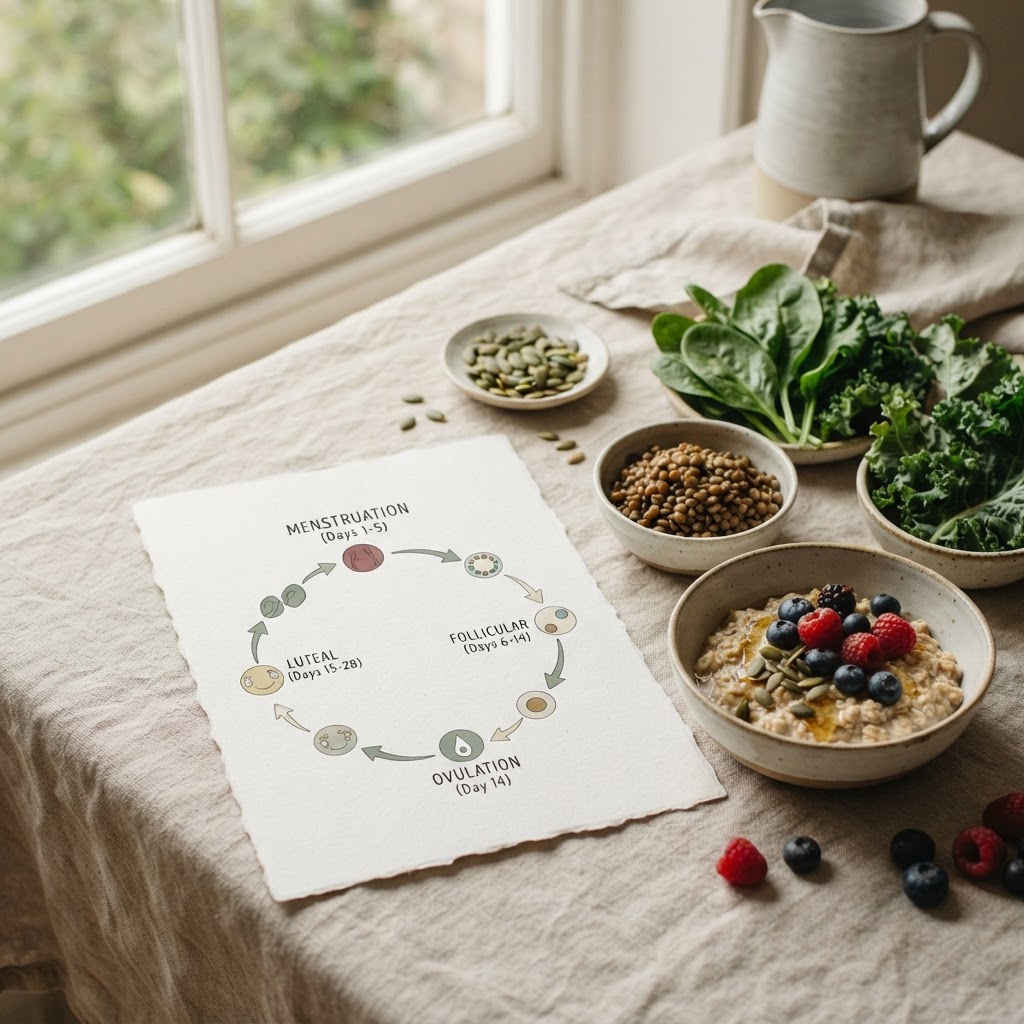
The menstrual cycle is not a single hormonal switch. Oestrogen rises through the follicular phase, reaches a peak close to ovulation, and then falls. Progesterone is comparatively low before ovulation and rises afterwards. Those changes interact with the brain, liver, muscle, adipose tissue, and digestive system. They can influence appetite and fuel use, but sleep, stress, activity, illness, medication, and the transition towards menopause matter too.
A prospective cohort study from the BioCycle project followed 259 healthy women aged 18 to 44 across up to two cycles. In their 2016 paper, O’Connor and colleagues reported differences in food and nutrient intake across cycle phases, including a tendency towards greater energy intake in the luteal phase. This was a human observational study, not an experiment proving that hormones caused each meal choice. Its value is that it makes a familiar experience visible: appetite may not be static across the month.
A 2017 review by Asarian and Geary also described ovarian hormones as relevant to the biology of appetite and body-weight regulation. It was a review of clinical and preclinical evidence, so it helps explain possible mechanisms rather than offering a personalised prescription. The sensible conclusion is not that oestrogen makes you eat well and progesterone makes you lose control. It is that appetite is biological, responsive, and deserving of better questions than “Why am I being good or bad?”
Why perimenopause makes the pattern less tidy
In a regular cycle, it is tempting to turn the calendar into a set of instructions. In perimenopause, that can create more pressure than clarity. Ovulation may occur later, earlier, or not in every cycle. Bleeding dates may no longer tell you exactly where you are hormonally, and a symptom such as poor sleep can alter appetite the following day.
This is why I prefer the phrase cycle-aware nutrition to cycle-syncing rules. The first is an observation practice. The second can sound like a promise that eating a particular seed, tea, or food group on a particular day will control hormones. There is not robust evidence for that kind of precise claim.
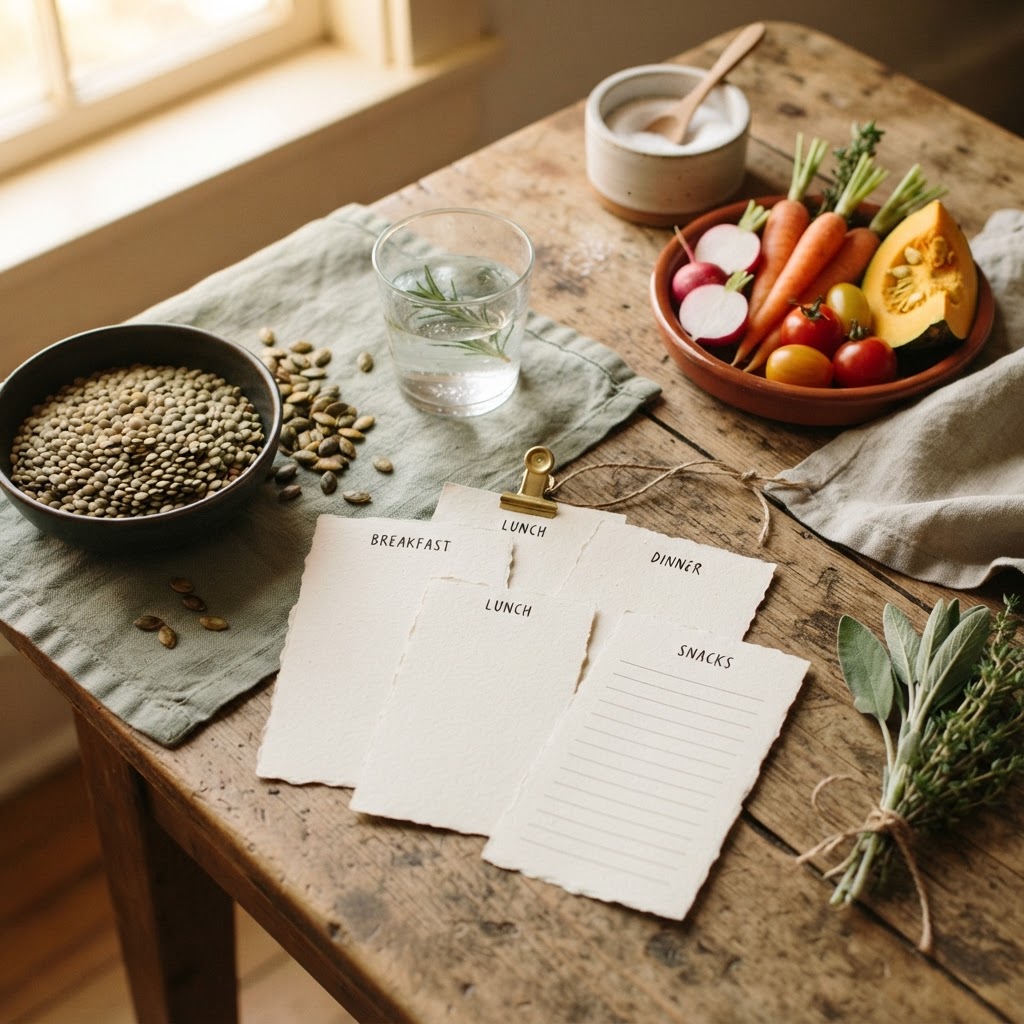
Instead, you can track four gentle signals: appetite, energy, sleep, and digestion. Give each a simple score from one to five, and add a note when your cycle starts, if you have a bleed. After two cycles, look for repeated associations. Perhaps you need a more substantial breakfast after poor sleep. Perhaps your usual lunch is enough on an active day but not on a sedentary one. Perhaps the days you label “ovulation” are actually days when you feel more social and move more, which changes your energy needs.
What to eat when appetite feels different
The most helpful ovulation nutrition plan is deliberately unglamorous. It gives your body enough building material, steadier fuel, and plenty of choice. Start with protein at each meal: eggs, yoghurt, fish, tofu, beans, lentils, or poultry, depending on how you eat. Protein is not a hormone-balancing trick. It is simply one part of a satisfying meal that supports muscle maintenance and helps you stay fed between meals.
Add a fibre-rich carbohydrate such as oats, potatoes, beans, barley, or wholegrain bread, then include colourful plants and a source of unsaturated fat, such as olive oil, avocado, walnuts, or seeds. That structure works in every phase. The portion can move with your hunger and activity. It is more useful than removing carbohydrate because you feel temporarily less hungry.
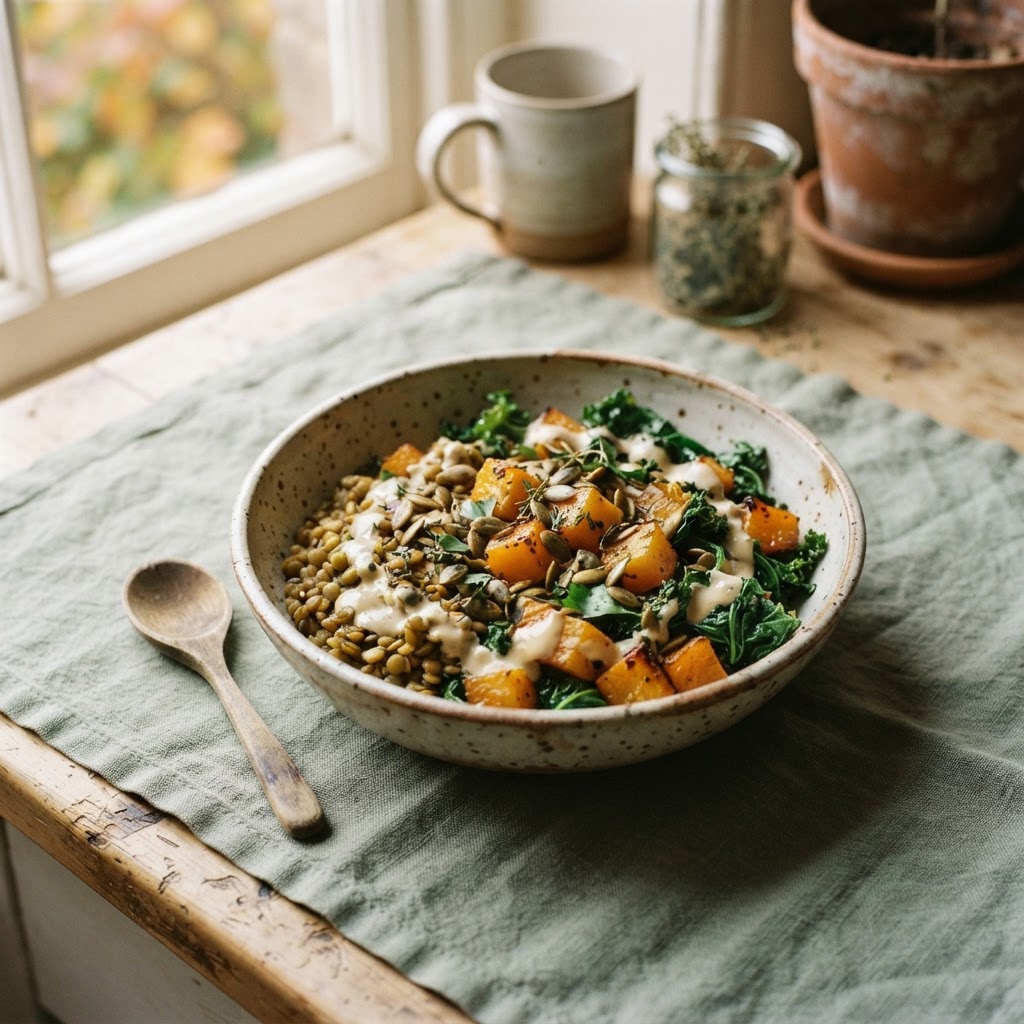
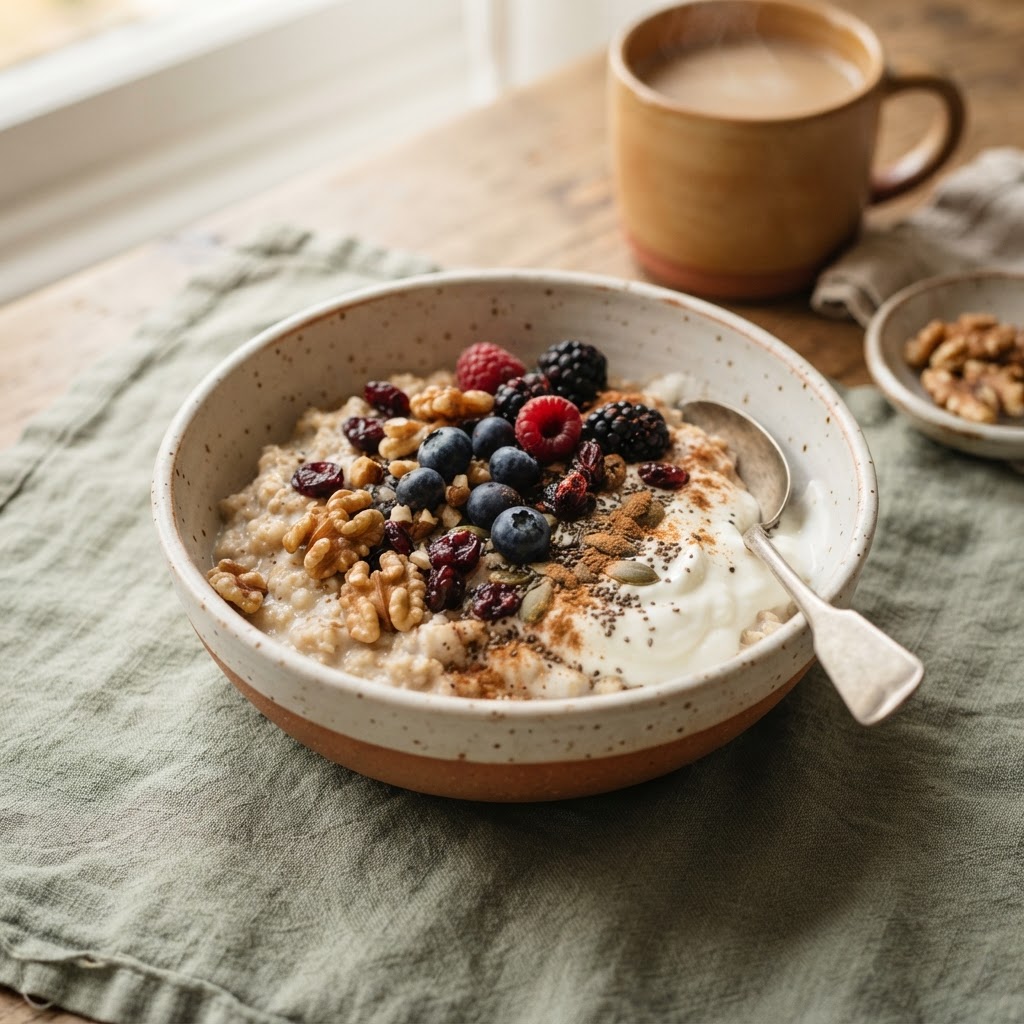
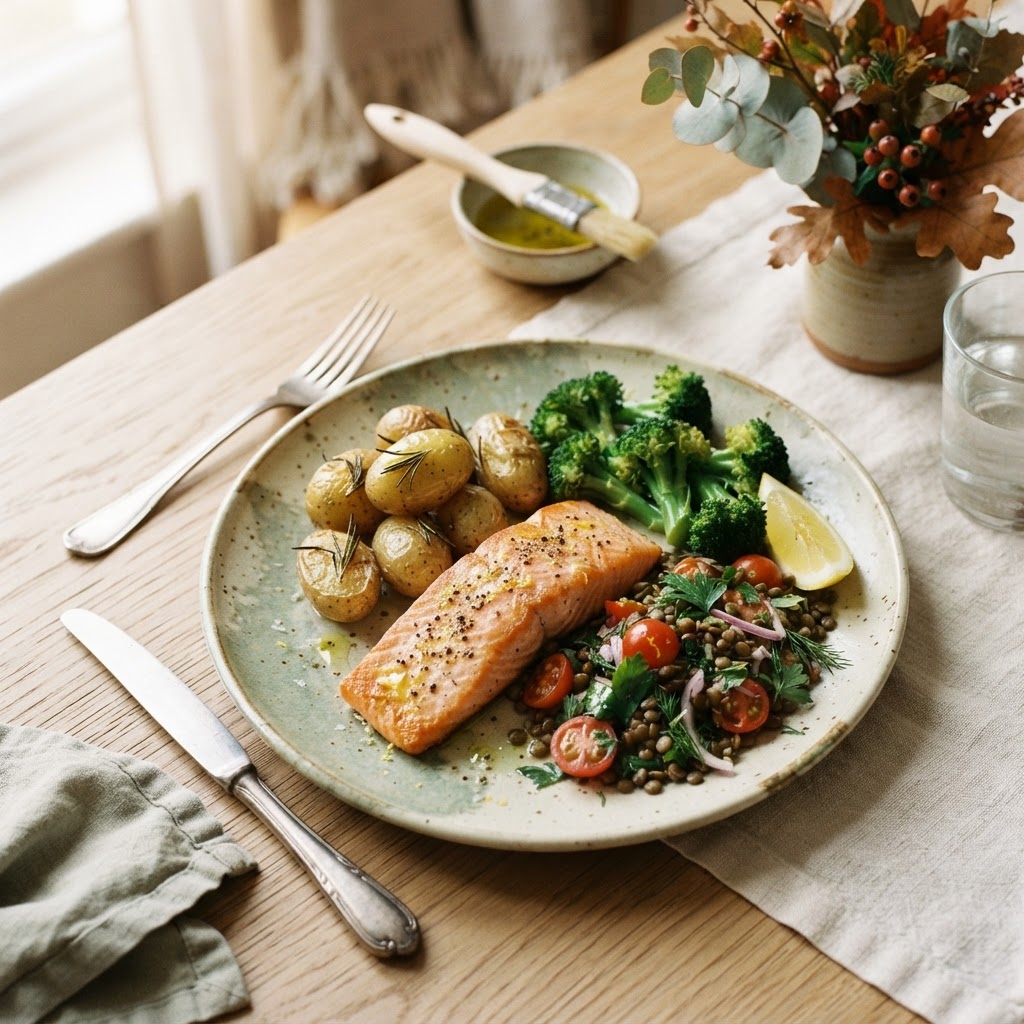
For an autumn breakfast, try oats with Greek yoghurt, berries, walnuts, and cinnamon. At lunch, use lentils with roasted squash, greens, pumpkin seeds, and a tahini dressing. At dinner, pair salmon or tofu with potatoes, broccoli, and olive oil. These meals are not “ovulation foods”. They are practical templates that make it easier to respond to a changing appetite without turning food into a test.
A flexible ovulation-phase template for this week
If you want to experiment, use the next seven days as a small observation rather than a challenge. Keep breakfast and lunch broadly consistent for three days. Include a palm-sized portion of protein, two handfuls of plants, a cupped-hand portion of fibre-rich carbohydrate, and a thumb-sized portion of fat. If you are hungry sooner, add more. If you are not hungry at your usual time, make the meal smaller, but do not use low appetite as a reason to skip food all day.
On active days, place carbohydrate near the activity if that feels comfortable. On days when sleep has been poor, treat hunger as information rather than a character flaw. A yoghurt and fruit, hummus with wholegrain toast, or an apple with peanut butter can be a useful bridge between meals. In the days after ovulation, keep the same structure available and let your appetite guide the amount.
The International Society of Sports Nutrition’s 2023 position stand makes a similar practical point for physically active women: nutritional needs are individual, hormone profiles are not perfectly predictable, and tracking personal patterns can be more useful than applying one universal rule. This is an expert position statement, not a trial, so it is guidance rather than proof. It does, however, fit the more honest direction of the evidence.
The useful question is not “Which phase am I in?”
For some women, phase-specific language is reassuring. For others, it adds another layer of monitoring to an already busy life. Neither response is wrong. The useful question is whether noticing your cycle gives you more self-knowledge and less judgement.
If your periods are changing, you have severe pain, very heavy bleeding, new symptoms, or a sudden change in appetite or weight, speak with a qualified healthcare professional. Nutrition can support wellbeing, but it cannot diagnose an endocrine disorder or explain every change in midlife.
The Cellular Reset takes this same food-first, personalised approach, connecting daily choices with the biology they are intended to support. You can read about The Cellular Reset programme here, or explore the Cellular Reset ebook if you would like the framework in a format you can return to.
References and evidence notes
O’Connor KA et al. (2016), European Journal of Nutrition, prospective cohort study of 259 healthy women, reported changes in macronutrient, micronutrient, and food-group intake across menstrual-cycle phases. Read the DOI. Evidence level: human prospective cohort.
Asarian L and Geary N (2017), Human Reproduction Update, reviewed clinical and preclinical evidence on ovarian hormones, appetite, energy expenditure, and obesity biology. Read the DOI. Evidence level: systematic review of human and preclinical evidence.
Smith-Ryan AE et al. (2023), Journal of the International Society of Sports Nutrition, position stand on nutritional concerns of the female athlete, including individual variation across reproductive life stages. Read the DOI. Evidence level: expert position statement and literature review.
Medical note: This article is for education and general wellbeing, not diagnosis or individual medical advice. If you have symptoms that concern you, or if your cycle changes significantly, please speak with your GP or another qualified healthcare professional.
Free Assessment
What is your biological age?
Most women in perimenopause are ageing faster than their chronological age suggests. The free Bio Age Assessment takes three minutes and gives you a personalised starting point — based on your lifestyle, not a blood test.


